This is the final week of my internship with DHF. Time passes so quickly! I thought I would leave you with a few reflections about my summer in Cajamarca.
First, here are some of the highlights of my two-and-a-half months with DHF:

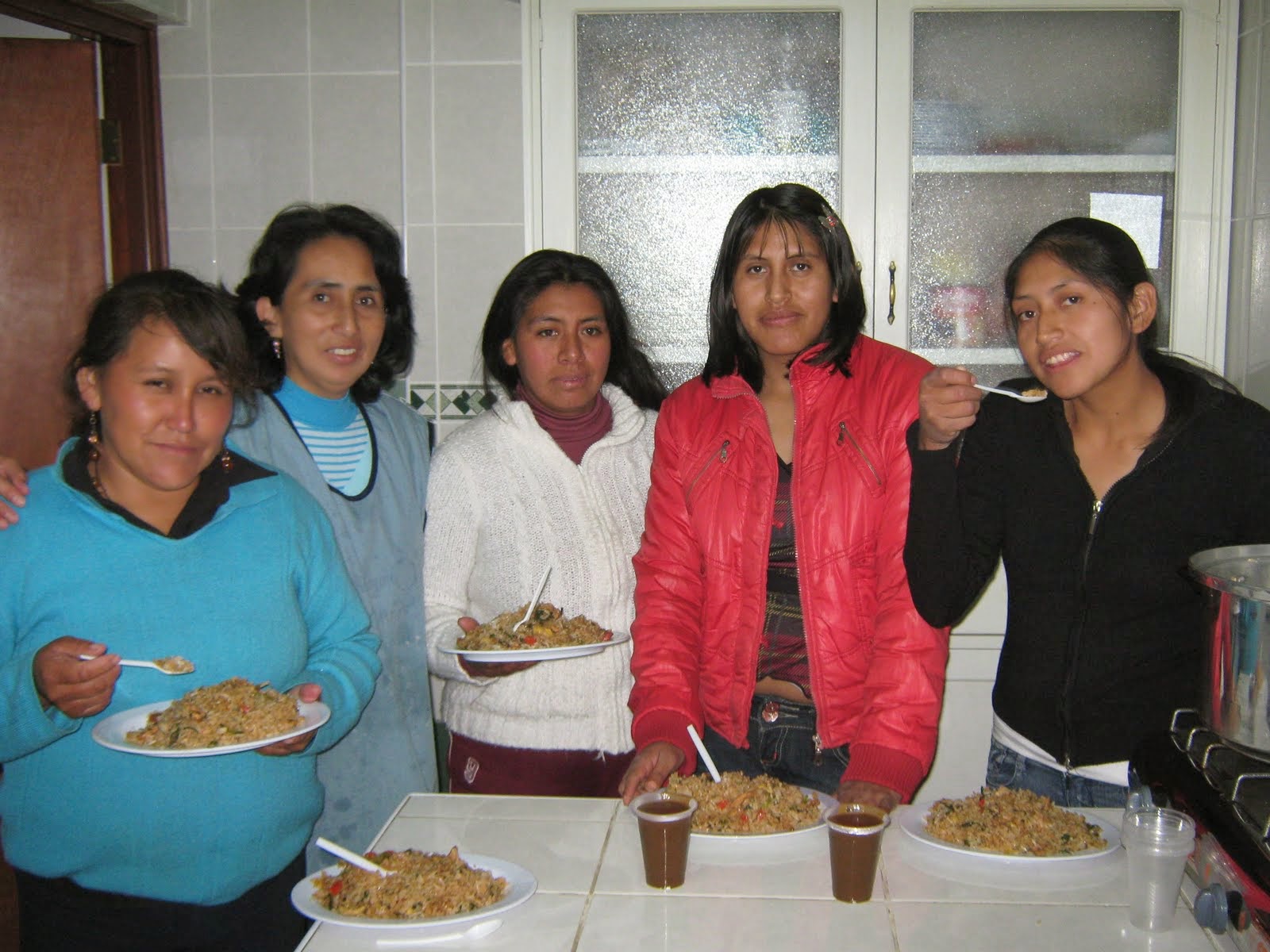
Getting to sample delicious treats from cooking class, like mil hojas pastries and colado de frijol pudding. Here are some of our women from the bank Fuerza y Bendicion sampling their chicken fried rice.

Building marshmellow and gumdrop towers at our final leadership workshop in Baños del Inca. It was very gratifying to take charge of an activity, and find that the women really enjoyed it.
 Jewelry Buy Day: While it was exhausting to spend all day sorting through women's jewelry submissions, it was great to see that all their hard work would pay off for them, literally.
Literacy testing: Last week we tested our literacy students on their progress. I was happy to see that the literacy exams I had been designing all summer actually worked.


Interviewing motivated and inspiring women, like Juana (above) and Nancy (below center).

What was it like to intern for DHF?
I definitely gained a better sense of what it's like to work in international development. I learned that working for a small NGO can have both its upsides and its downsides. A downside is that with so few employees, you basically have to do everything yourself: unglamorous tasks like mopping up the bathroom your office shares with the neighboring psychiatric and childcare centers (messy); trying to figure out how to refill the printer cartridge by yourself to save money (ending up with ink all over the floor and a still empty cartridge); working every day even if you are sick because there is no one to replace you (and getting used to being sick due to the omnipresence of foreign germs); and going home hoping to relax, only to find that your electricity is out or the water has stopped running.
But it also means you get to experience the side of international development that you cannot get working in an office in Washington DC. Lack of creature comforts aside, what is the value of getting to see the faces of the people you are serving every day? What is the value of learning that, thanks to the last jewelry export day you organized, an elderly woman can now afford her medicine? Or a young woman telling you that she used to be afraid to speak in public, but now that she is president of her village bank she is no longer afraid to make mistakes publicly? Or a woman who used to think that only men could be leaders, but now knows that she, a motivated businesswoman, mother, student, and friend is also a leader? These are anecdotes that we can read about on the U.S. side, reports that we can request from our workers on the ground, but it is never quite the same as getting to help someone personally.
I also learned more about realities of the poor in developing countries. Take, for example, one afternoon when I was scheduled to go interview a woman about her successful jewelry-making business. I arrived at her house around 4pm only to find everyone running around hysterically. It turns out that they received a phone call from scam artists in Lima claiming that they were policeman who had found their son, a university student, carrying drugs. They said they would turn him in to the regional headquarters unless the family sent them $200 as a bribe. The mother was hysterically crying, a sister ran off to the university to see if she could find her brother, and the father went to borrow money from friends so he could pay the bribe. They were too afraid to call the police because if the story was true, then corrupt policemen were already involved. Fortunately the sister found her brother before they paid the bribe.
Or the village bank members who live in an isolated neighborhood in the countryside that can no longer be reached by bus because the municipality decided to do construction on all the main roads at once.
Or the woman who has never touched a computer in her life, because they simply don’t exist in her neighborhood, but has dreams of being able to work as a secretary.
The reality of the lives of the poor is that they are unstable. Uncomfortable. Full of stress, and sometimes, tragedy. But also full of a hope to be able to “salir adelante,” an appreciation of the importance of friends and family, and a sense of being blessed for having the little you do have.

 Elizabeth and Mari helping the village bank Directive of Violetas sort through their first loan paperwork.
  New loan recipient from Violetas showing off her first loan money.